


Tourist Info for Rome Italy: The Best Tips to Know!

Updated: Mar 7

Table of Contents
Rome doesn't ease you in gently. It hits you all at once — cobblestones underfoot, a two-thousand-year-old ruin around every corner, the river Tiber flowing right down the middle, and the smell of espresso drifting out of a bar that's been there since your grandparents were young. It's chaotic, beautiful, overwhelming, and absolutely magnificent.
But here's the thing: Rome rewards those who come prepared. The tourists who have the best time aren't the ones who wing it — they're the ones who knew which line to stand in, which bus rules to follow, and which hidden church contains one of the greatest sculptures ever carved from marble.
This guide that covers tourist info for Rome will cover everything I can think of. Getting from the airport without getting fined. Navigating buses like a local. Finding every Michelangelo work in the city. Where to eat pasta that will genuinely ruin all other pasta for you. What to do when you're sick and need medicine. And the mistakes that trip up first-time visitors, so you can sidestep every single one.
Whether it's your first visit or your fifth, Rome always has something new to show you. Here's how to make the most of it.
Getting to Rome: Airport Transfers and Transport Tips
The Leonardo Express: What Nobody Tells You
The Leonardo Express is the fastest way from Fiumicino Airport to the city center — 32 minutes, nonstop, straight to Roma Termini. It runs every 15 minutes during peak hours and every 30 minutes off-peak. Tickets cost €14 per person. This is an easy walk from the airport exit, after you pick up your luggage follow the signs for Train and walk on the walkway. You will be there in 5 minutes.
Sounds simple. But this is where a lot of visitors lose money before they've even seen their first fountain.
First: make sure you board the right train. There are two trains at Fiumicino airport station, and they leave from the same platform area. The Leonardo Express goes nonstop to Roma Termini. The FL1 regional train goes to Trastevere, Ostiense, and Tiburtina — but NOT to Termini. It's cheaper (about €8), but if you're expecting Termini, you'll end up at a completely different station with all your luggage and zero idea where you are.
Before boarding: check the departure board. If it says "Roma Termini" as the only destination, that's the Leonardo Express. Multiple stops listed? That's the FL1.
Second: buy your ticket from the right place. The official Trenitalia price is €14. Full stop. But search "Leonardo Express tickets" online and you'll find third-party sites charging €17–22 for the exact same ticket, dressed up with "booking fees" and "guaranteed boarding" — for a train with no assigned seats that cannot sell out. Buy directly from:
The Trenitalia website or app (pre-validated; you just show the QR code)
The red Trenitalia machines at the station
The Trenitalia ticket counter
Third: validate your paper ticket. This is the single most common source of fines on this train. If you bought a paper ticket from the Trenitalia machine, you must validate it before boarding using the small green validation machines on the platform. Listen for the click. No click means no valid ticket — and the fine is €50 on the spot. Refuse to pay immediately and it becomes €100.
There's one important nuance: going FROM the airport TO Termini, turnstile gates at the airport auto-validate your ticket when you scan to enter the platform. Going FROM Termini TO the airport, there are no turnstiles. You must find the green machines and stamp your ticket yourself. This is where most fines happen — stressed travelers rushing to catch a flight who skip validation.
If you bought online and have a QR code, you're already validated. No stamping needed.
Group travel tip most people miss: If you're traveling with four people, ask for the "Mini-groups" fare — 4 tickets for €40 instead of €56. That's €10 per person instead of €14, and €16 saved before you reach your hotel. Available at the ticket counter, the machines, or on the Trenitalia website.
And do the taxi math. A Roma Capitale taxi from Fiumicino to anywhere inside the Aurelian Walls (essentially all of central Rome) costs €55 fixed — up to 4 passengers, all luggage included, no surcharges. Four Leonardo Express tickets cost €56. For a group of four, a taxi is literally cheaper and drops you at your hotel door. Just make sure the cab says "Roma Capitale" on the door — Fiumicino municipal taxis charge €80 for the same ride.
Finally, the Leonardo Express doesn't run 24 hours. From the airport, the first train departs at 6:23 AM and the last at 11:23 PM. From Termini, first at 5:35 AM and last at 10:35 PM. If your flight lands after 11 PM, you're taking a taxi or a night bus (Cotral buses run to Tiburtina for about €5 but take over an hour).
Bonus: On the Leonardo Express heading from the airport to Rome, sit on the left side of the train. As you approach the city, you'll get a stunning view of the Vatican dome and the skyline. On a clear morning, it's genuinely breathtaking. Most tourists stare at their phones. Don't be most tourists.

Buses: The Cheap and Brilliant Way to Get Around Rome
Italian buses cost €1.50 and will take you anywhere in the city. They're the cheapest way to get around. They're also where tourists get fined every single day — because nobody explains the rules. Public Transportation is most commonly used by the locals too.
You cannot buy a ticket on the bus. There are no ticket machines on board. The driver won't sell you anything. In most Italian cities, talking to the driver while they're operating the bus isn't even permitted. You buy your ticket before you board, always. Options:
Tabacchi — the small shops with the black-and-white "T" sign outside. Walk in and say "un biglietto dell'autobus." Buy a few extras so you're never caught without one.
Metro stations — ticket machines sell the same tickets valid on buses, trams, and metro.
Newsstands — street kiosks often sell them.
Apps — Rome uses TicketAppy and MooneyGo. Buy and validate digital tickets directly on your phone.
Contactless tap — in Rome, tap a contactless card or Apple Pay/Google Pay on the reader when you board. One tap equals one ticket equals one person. If you're traveling with someone, each person must tap their own card.
Having the ticket isn't enough — you must validate it. There's a small yellow validation machine on the bus, usually near the front or middle doors. Insert your ticket; it stamps the date and time. Until you do this, your ticket is a blank piece of paper. An unvalidated ticket is treated exactly the same as no ticket at all.
The fine is €50 if paid within five days. In other cities it can reach €500. Inspectors have your passport details and will follow up. They are not bluffing.
Why does the system work this way? Because a single ticket is valid for 75–100 minutes from the moment you validate. During that window, you can switch buses, take the tram, even use the metro. The clock starts when you stamp. If you never stamp, there's no clock, and theoretically the ticket is reusable — which is exactly why inspectors are so strict about it.
If the validation machine is broken (which happens more often than it should), that's still not a valid excuse. Write the date and time on the ticket yourself in European format: DD/MM/YY. Most Italian bus tickets have a space on the back for exactly this. This is the official ATAC procedure. Always carry a pen.

Buy a pass if you're using transport more than twice a day. Single tickets are a waste of money otherwise. Rome's options:
Single ticket: €1.50 (100 minutes)
24-hour pass: €7
48-hour pass: €12.50
72-hour pass: €18
7-day pass: €24
Four rides on single tickets: €6. A 24-hour pass covering unlimited rides all day and night: €7. The math speaks for itself.
Validate a multi-day pass once — the first time you use it. After that, just carry it. But watch the clock: passes expire exactly 24, 48, or 72 hours from the moment you first validated. Not at midnight. Not at the end of the day. If you validate at 2 PM on Tuesday, it dies at 2 PM on Wednesday. Take a photo of the stamped ticket so you have the exact expiration time on your phone. Set an alarm.
Ticket Type | Price | Validity | Best For |
Single Ticket (BIT) | €1.50 | 100 minutes | 1-2 rides per day |
24-Hour Pass | €7 | 24 hours from validation | 3+ rides in one day |
48-Hour Pass | €12.50 | 48 hours from validation | Weekend visitors |
72-Hour Pass | €18 | 72 hours from validation | 3-day city exploration |
7-Day Pass | €24 | 7 days from validation | Extended stays |
Inspectors are real and they target tourist routes. There are no turnstiles on Italian buses — you just walk on. This makes tourists think it's an honor system. It's not. Inspectors board randomly, work in pairs (one from the front, one from the back), and check every passenger. They specifically target Bus 64 (Termini to the Vatican) and Bus 40 — two of the most tourist-heavy routes in Rome. Assume you'll be checked.
Other things to know:
Wave at the driver or step toward the road to signal you want to board — the bus won't automatically stop for someone standing passively at a sign.
Press the red button or strip near the doors before your stop, not when you're already there. If nobody presses, the driver may skip the stop entirely.
Board from the front or back doors. Middle doors are for exiting.
Regular buses stop between 11:30 PM and midnight. Night buses (marked with an "N" — N1, N2, etc.) take over, running every 30–40 minutes from Termini. On Fridays and Saturdays, the metro runs until 1:30 AM instead of the usual 11:30 PM.
Use the ATAC app for live bus tracking, not the schedule posted at the stop. That schedule is a suggestion, not a contract.
On Bus 64 and Bus 40 specifically: keep your bag in front of your body, zipped closed, hand on the zip. These are the most pickpocket-heavy buses in Italy. It's not a rumor. Be aware of anyone pressing against you near the doors when the bus slows down.
The Major Landmarks and Tourist Attractions
These are some of the most popular sights, guaranteed to be crowded whenever you visit.
Landmark | Entry Fee | Advance Booking |
Colosseum + Forum + Palatine Hill | €16-18 | Highly recommended |
Vatican Museums + Sistine Chapel | €17 | Required |
St. Peter's Basilica | Free (Dome: €8) | No (arrive early) |
Pantheon | €5 | Recommended online |
Trevi Fountain | €2 | No |
Borghese Gallery | €15-20 | Mandatory (timed entry) |

The Colosseum
The Colosseum is genuinely as breathtaking as everyone says — a two-thousand-year-old amphitheater that once held 50,000 spectators watching gladiatorial combat. Book tickets in advance. The line without a ticket can stretch past two hours in peak season, and no view of the building is worth two hours of standing in the sun.
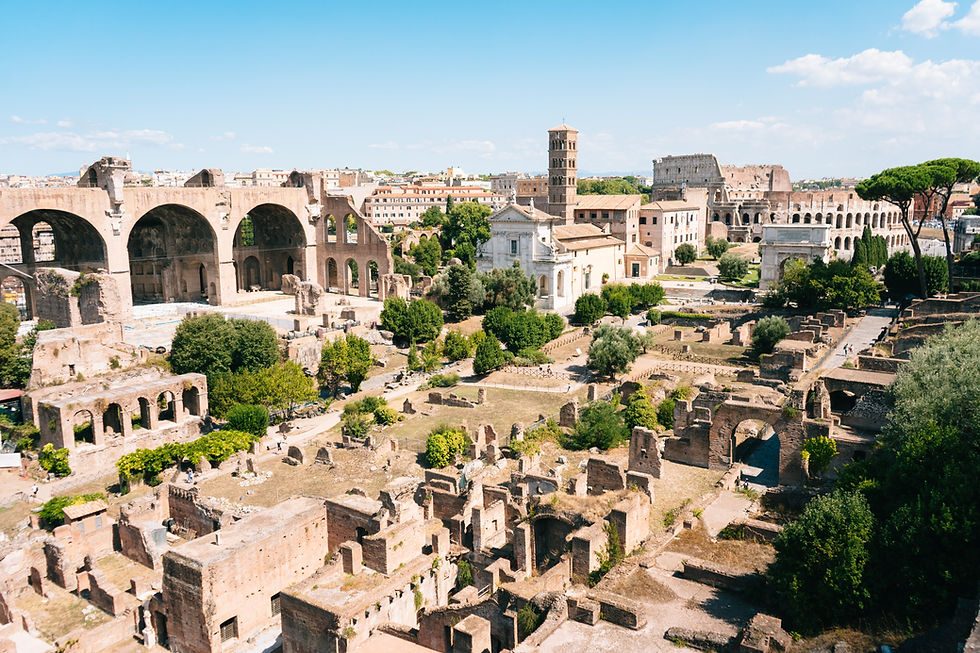
Here's the trick most visitors don't know: your Colosseum ticket is also valid for the Roman Forum (ancient Roman ruins) and Palatine Hill. And the line at the Roman Forum entrance is significantly shorter. You can enter through the Forum and walk straight into the Colosseum from the inside, bypassing the main queue entirely. This is easily the most popular tourist destination in Rome.

Vatican City
Vatican City is a country inside a city, and a full day barely does it justice. The Vatican Museums alone could swallow an entire morning — 9 kilometers of galleries leading to the Sistine Chapel. Book tickets in advance at the official Vatican website. The best-kept secret for visiting: Friday evenings in summer, the Museums are open until 10:30 PM. By the time you reach the Sistine Chapel, the daytime crowds have thinned considerably.
St. Peter's Basilica is free to enter. No ticket needed. Arrive by 7:30 AM when it opens and you'll walk straight in. If you want to climb the dome, it costs about €8 — 551 steps, and the final stretch is a narrow spiral between the double shell of the dome. The view from the top is the best panorama in Rome.
One warning: a tour guide outside the Vatican told you entry to the Basilica costs money? It doesn't. Entry is free, audio guides cost €7 on the official site, and getting swept into an overpriced tour by someone outside the gates is one of the most common tourist traps in Rome.

The Pantheon
The Pantheon was built in 125 AD and has been in continuous use ever since — which makes it the best-preserved ancient building in the world. The oculus at the top, a circular opening 9 meters wide, is still the only source of light inside. Before about 2 years ago you could enter this historic site for free, but now you have to purchase a ticket for 5 Euros. Two lines form outside — one for ticket holders, one for those without. Join the wrong one and you'll waste 30 minutes before realizing your mistake. Buy tickets online in advance. As you can tell by the picture it is always crowded here.

Piazza Navona
Step into Piazza Navona, and you step into the heart of Roman baroque drama, complete with tumbling fountains and lively street artists painting the scene in real time. Once a stadium for athletic contests (hence its elongated shape), it’s now a showstopper of a square where the breathtaking Fountain of the Four Rivers steals the spotlight with its marble gods and playful water jets. Enjoy a gelato or espresso at one of the outdoor cafés and soak in the living theatrical energy, day or night.

Spanish Steps
No trip to Rome is complete without ascending — or grandly descending — the Spanish Steps. This spectacular staircase, with its 135 travertine steps, flows down from the Trinità dei Monti church to the colorful Piazza di Spagna below, where the crowds gather and romance fills the air. Don’t sit down for a rest, though — it’s not allowed! Instead, snap a photo among the azaleas in spring and imagine the artists, poets, and dreamers who found their muse here.
When looking at the Spanish Steps, notice the French church at the top of the steps. Yes, I said it, its French. Also, if you look to the right of the steps, there is a large building that had apartments in it. This was home to a famous British poet John Keats. He lived here until his death, when he was trying to recover from Tuberculosis.
If you enjoy shopping and or window shopping at luxury stores, this is the area to do this at.

Trevi Fountain
Ready for a splash of magic? The Trevi Fountain is much more than an elaborate baroque wonder — it’s a wish-granting tradition that almost demands you participate. Stand facing the cascading marble sea gods, toss a coin over your left shoulder, and dream big: legend insists this ensures you’ll return to Rome. Visit at sunrise for a quieter, more enchanting moment, or come at night when the lights shimmer and the city’s spirit sparkles in every drop.
This tourist attraction will charge you an entrance fee of 2 Euros. This just recently started but has helped out with overcrowding at the site and helped to prevent pickpocketing.

The Wedding Cake (Vittoriano/Altare della Patria)
It’s bold, it’s bright white, and yes, most Romans call it “the Wedding Cake.” Officially known as the Vittoriano or Altare della Patria, this colossal monument rises in dazzling marble at Piazza Venezia. Built to honor Victor Emmanuel II, the first king of unified Italy, its grand staircases and glittering statues reach for the sky.
Climb (or ride the glass elevator) to the rooftop for jaw-dropping panoramic views across ancient and modern Rome — the city’s rooftops, domes, and ruins unfurling like a storybook beneath your feet. This was the building that shocked me the most. It's not an old building, but it is massive and the bright white color makes it stand out even more. I did not know this building existed until my first visit to Rome.

Piazza del Popolo
The Peoples Square, stop by here, look and walk around the piazza. Behind you is the old Aurelian Wall, this is the original entrance into Rome from the north, and a neat thing to experience, by walking though the wall and looking at the obelisk taken from Egypt, the identical buildings behind it and the statues to the left and right of the Piazza. One is of the Ancient history of Rome involving Romulus and Remus and the she-wolf..
Where to See Michelangelo Works in Rome
Most people visit Rome, wait in line at the Vatican, shuffle through the Sistine Chapel, and go home thinking they "saw the Michelangelo." They saw one Michelangelo. There are 14 in this city. And most of them are free.
Michelangelo moved to Rome at 21, lived there most of his adult life, and died there at 88. He spent nearly 70 years filling this city with sculptures, paintings, buildings, and an entire basilica dome. Here's where to find his work — and what most visitors completely miss.
Here is a chart of the most popular
Masterpiece | Location | Entry Cost |
Pietà | St. Peter's Basilica | Free |
Moses | San Pietro in Vincoli | Free |
Sistine Chapel Ceiling & Last Judgment | Vatican Museums | €17 |
Risen Christ | Santa Maria Sopra Minerva | Free |
Piazza del Campidoglio (architectural design) | Capitoline Hill | Free (24 hours) |
Santa Maria degli Angeli (church conversion) | Piazza della Repubblica | Free |

The Pietà — St. Peter's Basilica The most beautiful sculpture ever carved, created when Michelangelo was just 24 years old. The Virgin Mary holds the body of Christ, and the emotion in the marble is so real you forget it's stone. It's in the first chapel on the right as you enter the Basilica, now behind bulletproof glass after a man attacked it with a hammer in 1972. Free entry. Arrive at 7:30 AM. This is also the only work Michelangelo ever signed — he carved his name across Mary's sash after overhearing visitors credit the sculpture to another artist. He never signed anything again.
The Dome of St. Peter's Basilica Michelangelo designed it at 71 and never saw it finished — he died in 1564; the dome was completed in 1590. From outside in St. Peter's Square, it's free to admire. From inside the Basilica, stand under it and look up at the gold mosaic letters circling the base, each letter nearly 2 meters tall. Climbing to the top costs about €8 and rewards you with the best panoramic view in Rome.

Moses — San Pietro in Vincoli Possibly the most powerful sculpture in Rome, and most tourists have never heard of it. Moses sits with a gaze so intense that visitors have described it as terrifying — muscles that look like they're about to move, a beard flowing like water frozen in stone. Look closely at his head: two small horns, carved from a medieval mistranslation of Hebrew. Michelangelo knew the translation was wrong. He carved them anyway.
San Pietro in Vincoli is a free church a 10-minute walk from the Colosseum. You can stand directly in front of Moses — no glass, no ropes — and share the space with almost nobody. One of the greatest sculptures ever made, and it's essentially a secret.
Risen Christ — Santa Maria Sopra Minerva Steps from the Pantheon, inside one of Rome's only Gothic churches: Michelangelo's muscular, standing Christ, holding a cross. The nudity was intentional — symbolic of purity and resurrection. The church later added a bronze loincloth. It's still there. Free entry, left of the main altar.
Piazza del Campidoglio — Capitoline Hill Most tourists walk up here for the view of the Roman Forum and don't realize they're standing inside a Michelangelo masterpiece. He designed everything: the trapezoidal piazza, the geometric star pattern on the ground, the grand staircase, and the placement of the ancient bronze statue of Marcus Aurelius at the center. Open 24 hours. Come at night when it's lit and nearly empty, stand in the center of the star, and look around. You're standing in a Michelangelo masterpiece and it costs you nothing.
Palazzo Farnese exterior — Piazza Farnese When the original architect died, Michelangelo took over the most beautiful Renaissance palace in Rome. He designed the massive upper cornice (estimated at 300 tons), the dramatic central window above the entrance, and the rear facade. Free to admire from one of Rome's most beautiful squares.
Porta Pian Michelangelo's last architectural design, commissioned in 1561. Unlike his monumental earlier work, it's almost playful — theatrical and decorative, more like a stage set than a city gate. It's on Via XX Settembre, a free piece of architecture on a public street, and 99% of tourists never know it exists.

Santa Maria degli Angeli — Piazza della Repubblica Michelangelo's last architectural project, commissioned when he was 86. He converted the ruins of the ancient Baths of Diocletian into a church — and his genius was in what he didn't destroy. The original walls, the massive Egyptian granite columns, the soaring vaulted ceilings: all still there. From the outside it still looks like a ruin. Step through the door and one of the largest church interiors in Rome opens up around you. Free entry, right next to Termini station. Most tourists walk past it every single day. I stopped here on my golf cart tour but did not go in at that time. I would have known nothing about this place if my driver didn't stop here and talk about it. Since my hotel was not far from this stop, I came back on my own time to visit.
Sistine Chapel Ceiling — Vatican Museums (€17) Between 1508 and 1512, Michelangelo painted 343 figures across this ceiling. He didn't want to do it. He told Pope Julius II he was a sculptor, not a painter. The Pope insisted. He spent four years on scaffolding painting above his head, developing chronic back and eye problems, with paint dripping into his eyes constantly. He wrote a poem about how much he hated it. The result changed the history of art.
The Last Judgment — Sistine Chapel (same ticket) Most people don't know the Sistine Chapel has two Michelangelos. Twenty-five years after finishing the ceiling, he returned to paint the altar wall — a massive scene of souls being judged, the saved rising on the left, the damned falling on the right. Darker, angrier, more complex than the ceiling. He painted himself into it as a flayed human skin held by Saint Bartholomew. A self-portrait of an artist who felt destroyed by his own work.

Sforza Chapel — Santa Maria Maggiore Michelangelo designed this chapel at 87. He died two years later without seeing it completed. The elliptical shape was unusual for the 1560s and became a blueprint for the Baroque architecture that would define Rome for the next century. Second chapel on the left as you enter. Most visitors walk straight past it. I was lucky enough to visit the basilica not knowing about the Michelangelo designs till I arrived. At the entrance there is information posted where you can learn many facts about this basilica.
This is one of 4 pilgrimage basilicas, and I absolutely fell in love with the art, sculptures. Plus, it was interesting to see the burial place for several popes and the Holy Crib.
How to see them all: Most of Michelangelo's work can be visited in a single walking day — St. Peter's, Castel Sant'Angelo, Palazzo Farnese, Santa Maria Sopra Minerva, Capitoline Hill, San Pietro in Vincoli, Porta Pia, Santa Maria degli Angeli, and Santa Maria Maggiore. For those of you who have mobility issues, the hop on hop off buses can help you some, as there are bus stops are closer to all locations, but you will never be dropped in front of the locations so you will still have lots of walking to do Visit the Michelangelo works at the Vatican on a separate day, the earlier you go the better, and remember there is a fee for these.
Hidden Gems
Trastevere and Monti neighborhoods
Trastevere sits across the Tiber River from the historic center, and it feels like the Rome that existed before tourists discovered Rome. Terracotta buildings draped in ivy, cobblestones worn smooth over centuries, children kicking footballs in piazzas where locals actually live. Wander without a plan. Eat at a restaurant where the menu is written on a chalkboard. The Basilica di Santa Maria in Trastevere, over 1,700 years old and glittering with gold mosaics, is free to enter and almost never crowded.
Monti is Rome's creative neighborhood — independent boutiques, vintage shops, craft cocktail bars, and trattorias where the owner knows every regular by name. It sits between the Colosseum and Roma Termini, which means most visitors pass through it without stopping. Stop. Piazza della Madonna dei Monti fills with young Romans most evenings, sharing wine and conversation in a way that feels completely unperformed. This is what la dolce vita actually looks like.

Janiculum Hill- Overlook, and cannon fire. Everyday at noon, the cannon is fired. It is a neat experience to see, but you will hear it all over Rome. This was started to let everyone know it was noon, you can not go by church bells in this city, because there are hundreds of churches, so back in the 1800's they started this tradition for those that wanted to know the time. This hill has a great overlook of the city too. .

Ruins of Largo di Torre Argentina, Feral Cat Sanctuary- Located on the corner of Via Florida and Via di Torre Argentina are Roman ruins where the cats rule. There are about 150 cats here and the goal of this sanctuary is to neuter and spay to control the populations. Rome loves their cats, and have for hundreds of years. They help to control the rodents in and around the city. Fun Fact: If you are standing on the sidewalk of Via Florida and looking straight ahead to the sanctuary, imagine as you move your head to the left towards Via Torre Argentina. Underneath the streets where the ruins are actually located, this is where Julius Caesar was killed. I stopped here on my golf cart tour for a couple minutes.

Saint Paul's Basilica "Outside the Walls"
By far this was my favorite site to see. Amazing and beautiful, looks nothing like a basilica from the outside with the many pillars and giant palm trees. You will be blown away with this stop as it is considered to be one of the 4 major papal basilicas and one of 7 pilgrimage churches. This basilica was built on top of the burial site of Apostle Paul. and when you walk to the front, climb down the stairs to see the tomb. I was shocked when I arrived and seen this.
It is called "Outside the Walls" because the basilica is located outside the city center, outside the ancient Severen or Aurelian Walls. I visited this spot on my way from the airport one time. I hired a driver to give me an extra hour, to see a couple sites, so I was able to spend 20 minutes here before heading to my hotel. Doing this is not the most budget friendly option, but it is on the way from airport to city center. Order an Uber or use Freenow to get a ride share come and see this basilica. You will not be disappointed.
Authentic Roman Cuisine
The best and more authentic food will not be near the Vatican. Restaurants near the tourist hot spots tend to be tourist traps. Go where locals eat. If a restaurant has photographs of food on the menu and someone outside trying to pull you in, walk past. Look for handwritten menus, specials that change daily, and a dining room where the majority of customers aren't speaking English.

Pasta
Roman pasta is a short list done magnificently: cacio e pepe (pecorino and black pepper), carbonara (egg, guanciale, pecorino — never cream), amatriciana (tomato, guanciale, pecorino), and gricia (guanciale and pecorino without tomato). The ingredients are simple; the technique is everything.
Pizza
Pizza maybe originated in Naples, but Pizza is well loved in Rome, and the best local Pizza spot is actually across the street from the Cat Sanctuary listed above. It's called Pizza Florida on Via Florida. Buy and slice and fall in love. Locals will line up to get a slice.
Cannoli
There are so many yummy deserts Italy is known for, but I always suggest getting a Canoli. Americans are used to a Cannoli with chocolate and chocolate chips. This is not the original Cannoli. The original is pistachio, and I highly recommend you try one while in Rome. A great place to pick one up is the corner building near the Trevi Fountain.

Gelato
Real gelato is kept in covered metal containers, not piled into fluffy colorful mountains in the window. Those enormous mounds of brightly colored gelato are made with artificial stabilizers to hold their shape and are largely aimed at tourists. Find a gelateria where the gelato sits flat in covered containers. Taste a few flavors before choosing. Pistachio and fior di latte are the truest test of a good gelateria.
Espresso
In Rome, espresso is consumed standing at the bar in about 45 seconds. It costs around €1–1.50 this way. Sit down and the price doubles. Order a cappuccino after midday and Romans will politely but definitely register their opinion. The coffee is genuinely excellent — no adjustments needed. All Italians do not drink espresso after 11AM, so if you order it late int he day, they will know you are a tourist. The best I found was on a side street near the Pantheon, Tazzo D'Oro.
Best Places to Eat
Enzo al 29- reservation will be needed, located in Trastevere. Has the best pasta (Carbonara) in the city. The meatballs are great too.
Suppli Roma- also in Trastevere, great for cheap eats.
Pastificio Guerra- a local institution, open since 1918, locals love it and very affordable. Located one block away from the Spanish Steps.
Egg Pasta= Located near the Vatican and the only restaurant near there that is not a tourist trap. Quick cooking egg pastas are their specialty. Only open for lunch. Perfect for a to go box.
AI42- Located in Monti, very limited seating, but get it for takeaway, great for lunch, but also great for dinner too. Remember just like this one, many restaurants are closed between lunch and dinner for a couple hours.
Campo de Fioro- market area has many options, and I love walking round here too. Try Forno for Pizza or Dar Filettaro for fish.
Termini Train Station, Mercato Centrale- lots of cheap eat here, over 40 restaurants and bars. Some may not be the most authentic, but if on a small budget, or wants lots of choices, check this place out. Just a warning, from my experience, I did not have any issue at Termini Station, and walking back to my hotel from there that was 2 blocks away. But generally, after dark it is not recommended to walk around here late at night.
Also, not for the food, but for the neat sight to see inside. The McDonalds (1 Piazza dei Cinquecento) at Termini Station. The older ancient wall, the Servian Wall built 2500 years ago. This wall is before the Aurelian wall. Part of this wall is located inside the McDonalds. Very neat and weird place to see it. (You can also see a part of the wall next to Termini station too.)
Practical Survival Tips
Book Everything in Advance
The Colosseum, the Vatican Museums, the Borghese Gallery (which requires advance booking and only admits visitors in 2-hour time slots) — book all of these before you arrive. Rome in peak season has lines that can cost you two to three hours of your day. Most major sites have official websites with online booking. Use them. I use Viator and GetYourGuide for everything. There are affordable and great walking food tours in Trastevere that will blow your mind.
Tourist Info in Rome: Common Mistakes to Avoid
Don't sit on the Spanish Steps. It's banned, and police will fine you.
Keep Passport with you. It is illegal to be visiting Italy and not carrying your passport with you. Some people think this it is ok to carry a photocopy of it and leave the original passport in the hotel safe, but technically it is not. This is why it is important to watch for pickpockets, because you must carry passport with you while in Italy. I so make copies and place in my luggage, and have a picture of my passport saved on my phone and send to my travel companions phone if I am traveling with someone as a precaution, but I always keep it with me when in Italy
Don't show up at the Trevi Fountain on Monday morning — they collect coins every Monday and Friday morning. The fountain is empty and surrounded by workers with buckets.
Most museums close on Mondays. Plan accordingly.
First Sunday Freebies. The first Sunday of every month many museums and sites are free to visit. They wave the tickets fees. Be aware if visiting this day, as it will be more crowded than normal, making for longer lines. If you want to take advantage of this pick a museum that is not as popular and remember places like the Borghese Gallery still makes you sign up in advance as they limit visitors daily.
Don't try to do the Vatican and the Colosseum in the same day. Both deserve full attention, and you'll be exhausted trying to rush through either.
See the Pope. This can happen just check the schedule and fill out the form ar in advance. Wednesday at 9AM is typically when it beings, security opens up at 7:30AM, but people line up early to get a seat. Click here to learn more.
Bring a refillable water bottle. Rome has hundreds of free drinking fountains (called nasoni) throughout the city. The water is excellent and some of these fountains have been her for years. This is perfect for the hot summers in this Italian city.
Check if your accommodation has an elevator before booking. Rome is full of beautiful old buildings — and beautiful old staircases that five floors of luggage will teach you to respect.
Check for Air Conditioning. With so many old building that have turned into hotels, or rentals, be sure they have air conditioning. It is not as common here as it is in the United States. Summers are hot, and even when I was here in December once, I needed air and I thought it was quite inadequate compared to what I was used to in the United States,
Dress appropriately: Not just for the season, but for visiting the basilicas too. Rome's high season is summer, which is extremely hot. Rome also has mild winters with out snow..... Most of the time. The Mediterranean climate means you can see 50's in December, but be prepared for rain. As for visiting churches, be respectful, no short shorts, no tank tops.
Safety
Rome is a safe city, but pickpocketing is a genuine issue in tourist areas, on crowded buses, and on the Metro. Keep your bag in front of your body, zipped. Don't put your phone in your back pocket. Be especially alert near the Vatican, the Colosseum, and on buses 64 and 40. Never hang your pocketbook on the back of a chair at a cafe or restaurant either.
I carry a cross-body bag, and it works perfectly for me. While I was in Rome a tourist I was talking to said his wallet stolen because he had it in his back pocket. It happened at the Trevi fountain. Luckily, he was only carrying one credit card and had the other in safe at the hotel.
If You Need Medicine or Medical Help
Getting sick while traveling is stressful enough. Getting sick in Italy without knowing how pharmacies work adds a whole new layer of confusion. Here's what you need to know.
There are no CVS or Walgreens in Italy. Every pharmacy is independently owned. Nothing sits on open shelves — including basic painkillers. You walk in and talk to a pharmacist. Look for the glowing green cross. A blue cross means a parafarmacia, which sells supplements and cosmetics but cannot fill prescriptions.
Italian pharmacies don't know American brand names. Here's the essential cheat sheet:
Common Need | American Brand | Ask for in Italy |
Pain/Fever Relief | Tylenol | TACHIPIRINA |
Pain/Anti-inflammatory | Advil/Motrin | MOMENT or BRUFEN |
Cold & Flu Relief | DayQuil | TACHIFLUDEC |
Allergy Relief | Benadryl | REACTINE |
Stomach Relief | Pepto-Bismol | GEFFER or describe symptoms |
Your American prescription is not valid in Italy. A pharmacist cannot legally fill it. If you need a prescription filled, you'll need to see an Italian doctor first. Options:
Guardia Medica — Italy's urgent care service, available 24/7, around €20–25 per consultation. In summer, many tourist areas have a Guardia Medica Turistica specifically for visitors.
Pronto Soccorso — the emergency room, free for everyone regardless of nationality. The average wait time in Rome is about 3 hours.
Call 112 — Italy's general emergency number, with English-speaking operators.
Pharmacies close for lunch. Most follow a schedule of 8:30 AM–12:30 PM and 3:30 PM–7:30 PM, and close entirely on Sundays and holidays. But Italy has a rotating system called Farmacia di Turno — pharmacies take turns staying open nights, weekends, and holidays. Every closed pharmacy posts the address of the nearest one currently on duty on its door. Search "farmacie di turno" plus your city online. In bigger cities, train station pharmacies are often open 24 hours.
Talk to the pharmacist. In Italy, the pharmacist is not a cashier — they're a trained medical professional. When Italians feel sick, many go to the pharmacy before they call a doctor. Walk in and describe your symptoms. Let them recommend the right medicine. They're genuinely excellent at this.
Bring more of your own medication than you think you'll need. Pack at least an extra week's supply of any prescription drugs, keep medicine in its original packaging, and know the generic name of everything you take. "Acetaminophen" works everywhere. "Tylenol" does not.
Your 3-Day Rome Itinerary
Day 1: Ancient Rome and the Eternal City
Morning: Start at the Colosseum when it opens. Use your combined ticket to walk through the Roman Forum and Palatine Hill — few places on earth put the weight of history under your feet quite like this. Plan for at least 3 hours.
Afternoon: Walk to San Pietro in Vincoli (10 minutes) to stand in front of Moses. Then head into the best Rome Neighborhood, the Monti neighborhood for lunch — find a trattoria on a side street, order the pasta of the day, take your time. After lunch, visit the Capitoline Hill and stand in Michelangelo's piazza.
Evening: Wander Trastevere at dusk. Dinner at a restaurant with a handwritten menu. If you are here at the right time of year, get the artichokes. Grab a Gelato from a covered container gelateria on the way back. If the colors of the Gelato are not bright, you are shopping from a real authentic gelateria. If you see real bright neon colors, they are not the true and authentic gelato makers.
Day 2: The Vatican and Renaissance Rome
Morning (early): Arrive at St. Peter's Basilica at 7:30 AM. The Pietà. The dome if you have the energy. Leave before the crowds arrive.
Mid-morning: Vatican Museums (pre-booked). Budget at least 3 hours. The Sistine Chapel is at the end — keep walking.
Afternoon: Cross the Tiber to Palazzo Farnese, then on to Santa Maria Sopra Minerva (Risen Christ) near the Pantheon. Visit the Pantheon itself — stand under the oculus. Finish the afternoon at the Trevi Fountain (check the schedule to make sure coins aren't being collected).
Evening: Aperitivo in the Campo de' Fiori area. Roman pizza by the slice for dinner.

Day 3: Hidden Gems and Local Rome
Morning: Santa Maria degli Angeli near Termini — walk through what used to be the greatest bathhouse in the ancient world. Then to Santa Maria Maggiore and the Sforza Chapel. I fell in love with Santa Maria Maggiore, it is even better than St Peter's Basilica because there are not any crowds. If you are a true believer, they have a piece of Jesus's crib down the stairs at the front of the church. It is in an Urn, but neat to think about if you believe it. Fun Fact: The gold for the ceiling was given by the Spanish King and Queen. All from the Christopher Columbus plunders of the New World.
Late morning: Walk to Porta Pia (15 minutes from Termini) — check off a Michelangelo that 99% of visitors never find.
Afternoon: For the art lover, The Borghese Gallery (pre-book, mandatory) for Bernini sculptures and a Caravaggio collection that will genuinely stop you in your tracks. Avoid going to Galleria Borghese on the Free Sunday which is the first Sunday of every month. It is very crowded that day. After your timed entry, walk through the Villa Borghese gardens if you are for nature lovers and people watchers.
If you're short on time or have limited mobility, consider taking a golf cart tour to explore the Villa Borghese Gardens. This option is ideal for those who find walking challenging, as golf carts can park conveniently close to the city viewpoint.
Evening: Back to your favorite neighborhood. One last espresso at the bar, standing up, for €1.50. One last gelato. Whatever didn't get crossed off the list stays on the list — because Rome doesn't fit in three days, and that's exactly why people keep coming back.
Make the Most of the Eternal City
Rome is one of those cities that doesn't give its best to people who rush. The best meals come from wandering until something smells right. The best moments come from ducking into a church because the door is open, only to find a Caravaggio hanging on the wall in the dark.
Come with a loose plan. Book the big things in advance. Know the bus rules, validate your tickets, bring medicine from home, and find the Moses statue. The tourists who leave Rome completely in love with it are the ones who combined a little preparation with a lot of curiosity.
That combination is all you need.
This blog contains affiliate links. If you click on the and make a purchase I might receive a commission at no extra cost to you.


Ik zie het consistente gebruik van neutrale terminologie door de gehele tekst heen. Het analytisch kader is constant. De website biedt aanvullende contextuele middelen die relevant zijn voor het onderwerp. Betrokkenheidsmodellen worden gecontextualiseerd via interactieve digitale platforms.
Loved this post, I am currently curating a trip for my clients in Italy, and this will come in handy!
This is valuable information. We had a bad experience in Rome when my son's new tablet was stolen near the Spanish Steps.
The transportation info in this article is GOLD! We winged it when it came to transportation, and having this information up front would have been so useful!