


Best Things to do Near Mammoth Cave in Kentucky!


Mammoth Cave National Park is home to the world's longest cave system, but most people have no idea the area around it is packed with just as many thrills above ground.
You drove hours to see the longest-known cave system in the United States. You booked your Mammoth Cave tours weeks ago. You checked the National Park Service gov website for hours and entrance fees. But once those cave tours wrap up, what then?
Most visitors walk back to their car and drive home, completely missing the hidden gems scattered within 30 minutes of the Mammoth Cave visitor center. From adrenaline-packed zip lines to quiet river paddles, this region offers experiences for every energy level and timeline.
This guide breaks down 15 must-do activities that turn a single-day cave trip into a full Kentucky adventure worth remembering
.

Things to do Near Mammoth Cave:
UNDERGROUND ADVENTURES
Mammoth Cave National Park isn't just one experience. It's a collection of ranger-led tours that take you through different sections of the longest cave system on Earth, each offering something completely different depending on your fitness level, time availability, and sense of adventure.
Visit Mammoth Cave National Park
Standing at the historic entrance to Mammoth Cave feels like stepping into another planet, not just another state.
This UNESCO World Heritage Site contains over 400 miles of passageways, and the National Park Service offers a variety of cave tours designed for every experience level. The Historic Tour takes you through the classic sections where early explorers like Stephen Bishop once guided visitors by lantern light. You'll walk through massive chambers like the Rotunda and see formations that have been drawing crowds since the 1800s. The Domes and Dripstones Tour focuses on the more decorative sections, where you'll encounter stalactites, stalagmites, and flowstone that took millennia to form.
For families with small children or anyone with little time, the shorter discovery tour covers the highlights without the physical demand of longer routes. Morning tours fill up fast during the summer season, especially on weekends and around Labor Day. Book directly through the official government organization website weeks in advance if you're visiting during peak times.

Wild Cave Tour experiences push well beyond the standard walkways. These off-trail tours require crawling, climbing, and squeezing through tight passages. You'll wear a helmet, headlamp, and kneepads while navigating sections most visitors never see. It's physically demanding but delivers an authentic caving experience that ranger-led programs can't replicate on paved paths.
What most people miss: The ranger-led program schedule shifts seasonally. Some tours only run during summer, while others operate year-round. The Snowball Room and Bottomless Pit are only accessible on specific tours, so if you want to see those formations, confirm which route includes them before booking.
One critical detail: Sensitive information like exact tour availability changes weekly. Always check the official websites for real-time updates rather than relying on third-party booking platforms that may show outdated schedules.
The Mammoth Cave experience isn't just about seeing rock formations. It's about understanding how this cave system shaped the region's history, science, and tourism industry. Every tour guide shares different stories, and the interactive exhibits inside the visitor center add context you won't get underground.
Explore Different Cave Tours Based on Your Fitness Level
Not all Mammoth Cave tours are created equal, and picking the wrong one can leave you exhausted, bored, or wishing you'd chosen differently.
The variety of tours available means you can tailor your underground experience to exactly what you want. Some visitors want a leisurely walk through history. Others want to crawl through muddy passages and emerge covered in limestone dust. The National Park Service structures tours by difficulty, duration, and the type of formations you'll see.
Mammoth Passage Tour: This is the most accessible option, perfect for visitors with mobility concerns or small children. It's short, paved, and focuses on the cave's history and size rather than challenging terrain.
Historic Tour: The most popular choice. You'll cover two miles over two hours, walking through the largest rooms and learning about the cave's role in American history. Expect stairs and uneven ground but nothing too strenuous.
Domes and Dripstones: If you want to see the most dramatic rock formations, this is your tour. It includes steep climbs and narrow passages, but the payoff is worth it. This tour showcases the cave's most photogenic spots.
Wild Cave Tour: For experienced adventurers only. You'll spend five to six hours crawling, climbing, and navigating tight spaces. It's the closest thing to true spelunking the park offers, and it books up months in advance.
Each tour operates on a fixed schedule, and some only run during certain months. The most popular tours sell out weeks ahead during peak season, especially for morning slots when the cave is cooler and less crowded.
Pro move: If you're visiting in summer, book a mid-afternoon tour. Most families with young kids opt for morning tours, so later slots are quieter. The temperature inside stays constant year-round at 54 degrees, so the time of day doesn't affect your comfort level underground.
What actually matters: Match the tour to your group's slowest member. If someone in your party can't handle stairs or extended walking, the Mammoth Passage Tour is your best option. Pushing someone beyond their comfort zone ruins the experience for everyone.
Tour guides rotate, and some are significantly better storytellers than others. If you get a guide who makes the tour feel like a geology lecture, that's just bad luck. The cave itself delivers regardless, but a great guide transforms the experience from interesting to unforgettable.
Hunt for Geodes, Gems, and Cool Rocks
Most people think rock hunting requires a PhD in geology or expensive equipment, but Cave City has turned it into a family-friendly activity where you're almost guaranteed to walk away with something shiny. This was one of my favorite things to de near Mammoth Cave. While staying at the KOA Cabin I noticed 2 Geodes that I brought home and cracked open.
Multiple shops and mines around Mammoth Cave let you dig, sift, and crack open geodes without any experience. You pay by the bucket, and everything you find is yours to keep. Kids love it because the results are immediate. Adults love it because it's oddly meditative and way more engaging than it sounds.
Some spots offer pre-filled buckets with guaranteed gems mixed into dirt and gravel. You sift through the material using water troughs, and within minutes, you're pulling out quartz, amethyst, and fossils. Other locations let you crack open whole geodes using a pipe cutter or small hammer. The thrill of splitting a plain-looking rock and finding purple crystals inside never gets old, even for skeptics.
The two best spots for rock hunting near Cave City:
Kentucky Down Under gem mining area: Part of the larger adventure park, this spot offers buckets filled with gemstones and minerals. It's convenient if you're already visiting to feed kangaroos or explore the onyx cave underneath the park.
Standalone gem mines in Cave City: These no-frills operations focus exclusively on rock hunting. You get larger buckets, better variety, and staff who actually know what you're finding instead of just handing you a bucket and walking away.
The best option depends on your group. If you have small children who need constant stimulation, the adventure park setup works better because they can bounce between activities. If you want a more authentic experience where you're finding higher-quality stones, the dedicated gem mines deliver better results.
What surprises most people: The rocks you find are real. These aren't dyed pebbles from a craft store. You're pulling out actual quartz points, geodes with crystal-lined interiors, and fossilized coral that's been buried for millions of years. Some visitors bring home stones worth $20 to $50 in a $15 bucket.
Quick win: Bring a small cooler or padded bag if you're cracking geodes. Some are fragile, and you don't want them shattering in your car on the drive home. Full build: Research what you're finding. Staff can identify most stones, but a quick online search when you get home reveals whether you found something common or genuinely rare.
This activity works in any weather since most of it happens under covered pavilions. It's also one of the few experiences in the area that doesn't require advance reservations. You just show up, pay for a bucket, and start digging.

ON THE WATER
The Green River and Nolin River cut through the heart of Mammoth Cave National Park, offering a completely different way to experience the landscape. Instead of looking up at cave ceilings, you're gliding past limestone bluffs, dense forests, and wildlife that never ventures near the crowded visitor center.
Canoe or Kayak the Green River
Paddling the Green River isn't about whitewater thrills or technical maneuvering. It's about quiet, scenic floating through one of Kentucky's most underrated natural settings.
The river moves slowly, making it ideal for beginners and families who want a peaceful experience without the stress of rapids or difficult navigation. You'll pass under limestone bluffs that tower overhead, drift past sandbars perfect for a mid-paddle break, and spot wildlife like herons, turtles, and the occasional deer coming down to drink.
Several outfitters near the park offer kayak and canoe rentals with shuttle service included. You start upstream, paddle at your own pace, and get picked up at a designated takeout point downstream. Trips range from two hours to full-day floats depending on how much time you want on the water.
The three most common trip lengths:
Short float (2-3 hours): Perfect for families with small children or anyone testing the waters for the first time. You cover about five miles, and the current does most of the work.
Half-day paddle (4-5 hours): The sweet spot for most paddlers. Long enough to feel like a real adventure but short enough that you're not exhausted by the end.
Full-day journey (6-8 hours): For experienced paddlers who want solitude and don't mind spending the better part of a day on the river. You'll cover 12 to 15 miles and see sections most visitors never reach.
Summer season is peak paddling time, but spring and early fall offer cooler temperatures and fewer crowds. The river is shallow in some sections during late summer, so check current conditions with your outfitter before booking. Winter paddling is possible but cold. Only experienced paddlers should attempt it.
Beginner tip: Kayaks are faster and easier to control solo. Canoes offer more space for gear and kids but require coordination if you're paddling tandem. Advanced move: Bring a dry bag with snacks, sunscreen, and a change of clothes. Even on calm water, splashes happen, and sitting in wet clothes for three hours kills the vibe.
What most people don't realize is how quiet the river gets once you're a mile from the launch point. You'll go long stretches without seeing another boat, and the only sounds are your paddle dipping into the water and birds calling from the trees. It's the opposite energy from the crowded cave tours, and for some visitors, it's the highlight of the trip.
waterfall on Green River Kayaking on Green RIver Green River
Fish the Nolin and Green Rivers
If you brought a rod or you're willing to rent one, the rivers around Mammoth Cave offer surprisingly good fishing without the crowds you'd find at more famous Kentucky fishing spots.
Both the Green River and Nolin River support healthy populations of bass, catfish, and panfish. You don't need a guide or a boat to catch fish here. Bank fishing works just fine, especially near the deeper pools where the current slows down.
What actually works: Smallmouth bass hit aggressively on topwater lures in the early morning and late evening. Catfish bite consistently throughout the day using cut bait or chicken liver. Bluegill and crappie swarm around submerged structure, so target areas with fallen trees or rocky outcrops.
Fishing regulations in Kentucky require a license for anyone 16 and older. You can purchase one online through the Kentucky Department of Fish and Wildlife Resources or at most bait shops near the park. Licenses are available as single-day or annual options depending on how long you're staying.
Here's the detail most visitors miss: The river inside Mammoth Cave National Park has different regulations than sections outside park boundaries. Some areas are catch-and-release only, and certain bait types are restricted to protect native species. Check the park's official websites or ask a park ranger before you cast.
Seasonal patterns matter. Spring offers the best bass fishing as they move into shallow water to spawn. Summer pushes most fish into deeper holes where the water stays cooler. Fall brings another feeding surge before winter, and catfish stay active even when temperatures drop.
For families with kids: Panfish are the best target. They're abundant, easy to catch, and kids get nonstop action instead of waiting hours for a single bite. Bring a bobber, a small hook, and worms. You'll catch fish within minutes, and the thrill of seeing that bobber dip underwater never fades.
Fishing here won't produce trophy catches that belong on magazine covers, but that's not the point. It's about unwinding, being outside, and adding another layer of experience to your trip that doesn't involve standing in line or following a tour guide.
HIGH-ADRENALINE ACTIVITIES
Not everyone visits Mammoth Cave to stroll quietly through underground passages or paddle lazy rivers. Some visitors want speed, height, and the kind of rush that gets your heart pounding. The area delivers on that front with activities that push well beyond the typical national park experience.
Zip Line Through the Kentucky Canopy

Strapping into a harness and launching off a platform 60 feet above the ground isn't for everyone, but if you've ever wondered what it feels like to fly, this gets close.
Several zip line operations near Cave City and Mammoth Cave National Park offer canopy tours that send you soaring over forests, across valleys, and between treetop platforms. The longest lines stretch over 1,000 feet, and you'll hit speeds that make your stomach drop for a split second before the thrill kicks in.
Most zip line courses include multiple lines of varying lengths and heights, connected by elevated walkways and suspension bridges. Guides handle all the technical setup, so even first-timers feel safe once they take that initial leap. The hardest part is stepping off the platform the first time. After that, you're hooked.
What separates the good courses from the mediocre ones:
Line variety: Courses with different heights and speeds keep the experience interesting. If every line feels the same, the novelty wears off halfway through.
Scenery: The best courses route you over creeks, rock formations, and dense forest instead of just open fields. The landscape matters as much as the speed.
Guide quality: Knowledgeable guides who share local history and keep the energy high make the experience memorable. Guides who just clip you in and send you off without commentary turn it into a mechanical process.
Duration: Tours range from 90 minutes to three hours. Longer tours include more lines and higher platforms but also more walking between stations. Pick based on your group's stamina.
Weight and age restrictions apply. Most courses require participants to weigh between 70 and 250 pounds and be at least seven years old. If you're traveling with small children, confirm requirements before booking.
Spring and fall offer the best zip line conditions. Summer can get uncomfortably hot when you're standing on exposed platforms in full sun, and winter temperatures make the experience less enjoyable unless you're layered up. Morning tours tend to be cooler and less crowded than afternoon slots.
First-timer advice: Wear closed-toe shoes with good grip. Sandals and flip-flops are prohibited on every course. Gloves are usually provided, but bring your own if you have sensitive hands. The braking systems create friction, and even with gloves, your palms might feel it by the end.
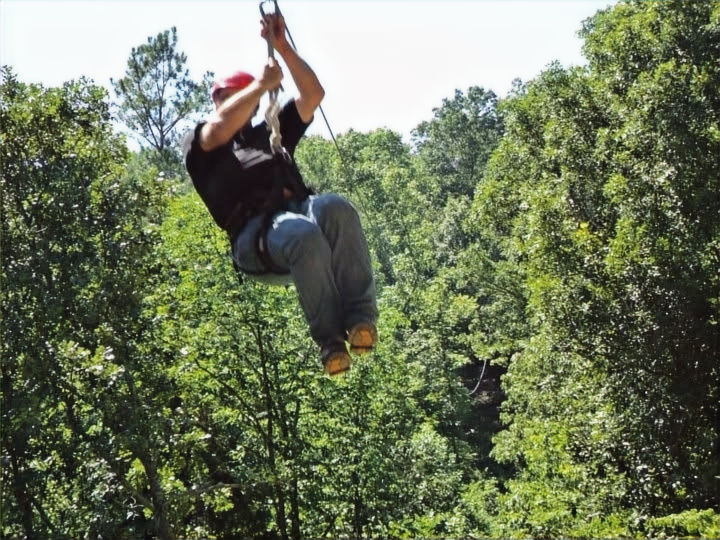
What catches most people off guard: How much trust you have to place in the equipment and guides. Once you're clipped in and dangling from a cable 70 feet above the ground, there's no backing out. That vulnerability is part of the thrill, but it's also what makes some people freeze on the first platform.
Zip lining works as a standalone activity or as part of a larger adventure day. Many visitors combine it with a cave tour in the morning and zip lines in the afternoon, spreading the experiences across different energy levels.

Horseback Riding Through Miles of Trails
Exploring Mammoth Cave's backcountry on horseback offers a perspective you can't get from a car, a bike, or even a long hike.
The park contains miles of backcountry trails that wind through forests, cross streams, and lead to overlooks most visitors never see. Guided horseback rides take you deeper into the park's quieter sections, where the only sounds are hoofbeats, birds, and the occasional rustle of a deer moving through the underbrush.
Local outfitters near the park offer trail rides ranging from one-hour introductory loops to half-day treks for experienced riders. Horses are calm, well-trained, and matched to your skill level. If you've never ridden before, guides start you on gentle trails with minimal elevation change. Experienced riders get more challenging routes with faster paces and varied terrain.
The best rides include:
Scenic overlook routes: These trails climb to higher elevations where you get sweeping views of the surrounding forest and river valleys. The climb is gradual, and the payoff at the top makes the effort worthwhile.
River valley rides: These routes follow creek beds and riverside trails, offering shade, water crossings, and wildlife sightings. They're flatter and easier on beginners.
Extended backcountry treks: Half-day or full-day rides for serious riders who want to cover serious ground. You'll venture miles from the trailhead and see sections of the park that receive almost no foot traffic.
Rides typically accommodate groups of six to ten riders, plus a guide. Smaller groups get more personalized attention and flexibility in pacing. Larger groups move slower and require more stops to keep everyone together.
What beginners need to know: You'll be sore the next day. Riding a horse for an hour engages muscles you didn't know existed. Stretch beforehand, wear long pants, and don't plan on hiking five miles the day after a long ride.
What experienced riders need to know: These aren't fast-paced gallops across open fields. Trails inside national parks have speed restrictions and terrain that keeps rides at a walk or slow trot. If you're expecting a high-speed adventure, adjust your expectations.
Seasonal considerations matter. Summer rides can get hot and buggy, especially in dense forest sections where air circulation is limited. Spring and fall offer cooler temperatures and fewer insects. Winter rides are available but cold. Dress in layers and expect a quiet, almost meditative experience.
Weight limits apply. Most outfitters cap riders at 250 pounds to protect the horses. If you're close to that limit, call ahead to confirm before making the trip.
Horseback riding works well for families, couples, and solo travelers who want a slower pace than zip lining but more engagement than a basic nature walk. It's also one of the few activities that feels equally appropriate for kids and adults without dumbing anything down.
FAMILY-FRIENDLY ATTRACTIONS
Not every activity near Mammoth Cave requires physical endurance or a taste for adrenaline. Some of the best stops cater to families with small children, groups looking for lighthearted fun, or anyone who wants to experience something quirky and memorable without breaking a sweat.
Visit Dinosaur World and See Life-Sized Dinosaurs
Dinosaur World sits just minutes from Cave City and offers exactly what the name promises, over 150 life-sized dinosaur sculptures scattered across a wooded walking trail.
This isn't a museum with ropes and glass cases. It's an outdoor park where you walk a loop trail and encounter massive dinosaur replicas around every turn. A T-Rex towers over the path. A Brachiosaurus stretches its neck into the canopy. A pack of Velociraptors looks ready to pounce. The scale of these sculptures hits differently when you're standing next to them instead of looking at pictures online.
Kids love it because dinosaurs are universally cool and the park doesn't feel educational in a boring way. Adults love it because it's genuinely well done and takes less than 90 minutes to experience, making it a perfect stop between longer activities.
What makes Dinosaur World worth the visit:
The sculptures are high quality. These aren't cheap fiberglass models. The details, poses, and paint jobs look accurate and impressive. Some parks cut corners on this, but Dinosaur World clearly invested in getting it right.
Interactive exhibits add value. Beyond the outdoor trail, the park includes a fossil dig where kids can uncover replica fossils, a museum with real fossils and educational displays, and a gift shop that doesn't feel like a tourist trap.
It's open year-round. Unlike some attractions that shut down in winter, Dinosaur World operates every day except Christmas Day. The outdoor trail is still enjoyable in cooler weather, and fewer crowds mean better photo opportunities.
The pacing works for young kids. The trail is flat, shaded, and short enough that toddlers can walk it without meltdowns. Benches are placed throughout for parents who need a break.
What most visitors don't expect: How much effort went into the landscaping and layout. This isn't just dinosaurs plopped randomly in a field. The trail winds through trees, crosses small bridges, and positions sculptures in ways that create moments of surprise. You round a corner and suddenly there's a massive dinosaur staring down at you.
Timing tip: Visit in the morning or late afternoon to avoid midday heat during summer. The trail is shaded but still warm when the sun is high. Morning visits also mean fewer school groups and tour buses.
Dinosaur World pairs well with other Cave City attractions. Many families hit the dinosaurs in the morning, grab lunch in town, and then head to Mammoth Cave for an afternoon tour. It's a low-stress way to fill a day without overloading kids with too much walking or waiting.
Explore Kentucky Down Under Adventure Zoo
Kentucky Down Under combines an Australian wildlife park with an underground cave tour, creating one of the strangest and most entertaining attractions in the region.
The surface section features kangaroos, wallabies, emus, parrots, and other Australian animals. You don't just look at them from a distance. You walk into the enclosures, feed kangaroos by hand, and watch birds land on your arm if you hold still long enough. The animals are accustomed to visitors, and handlers are always nearby to answer questions and make sure interactions stay safe.
Below the zoo, an onyx cave tour takes you through smaller but beautifully decorated cave passages. It's not as massive as Mammoth Cave, but the formations are more concentrated and colorful. The cave stays a constant cool temperature, making it a perfect escape if you're visiting during summer.
What makes Kentucky Down Under unique:
You get two experiences in one visit. The zoo and cave are included in a single ticket, so you're not paying separately for each attraction. That value proposition is hard to beat compared to other tourist attractions in the area.
The animal interactions are genuine. This isn't a petting zoo with tired goats. The kangaroos are healthy, active, and curious. Feeding them feels less like a staged photo op and more like a real encounter.
The cave tour is self-guided. Unlike Mammoth Cave where you follow a ranger on a strict schedule, this cave lets you move at your own pace. If you want to spend ten minutes staring at a single formation, no one rushes you.
It's a great place for kids who are too young for long cave tours. The combination of animals and a shorter cave experience holds their attention without overwhelming them.
Summer season brings outdoor shows and feedings. Handlers give presentations on animal behavior, and you can watch feedings that show how different species interact with food. These shows add educational value without feeling like a classroom lecture.
What catches first-time visitors off guard: How interactive everything is. Most zoos keep you behind barriers. Here, you're in the kangaroo habitat with them hopping around your feet. It's hands-on in a way that makes the experience memorable.
Plan for two to three hours. You can rush through in 90 minutes, but that defeats the purpose. The best visits happen when you slow down, spend time with the animals, and explore the cave without feeling like you're on a timer.
Kentucky Down Under works as a standalone destination or as part of a larger Cave City itinerary. It's especially valuable on hot days when you want a mix of indoor and outdoor activities.
OUTDOOR RECREATION BEYOND THE CAVES
Mammoth Cave National Park isn't just about underground passages. The surface landscape offers miles of trails, scenic overlooks, and backcountry areas that receive a fraction of the attention the caves get. For visitors who want fresh air, solitude, and a different perspective on the park, these outdoor spaces deliver.
Hike the Cedar Sink Trail and Heritage Trail
Cedar Sink Trail and Heritage Trail represent two completely different hiking experiences, but both showcase aspects of Mammoth Cave National Park that cave tours can't replicate.
Cedar Sink Trail is a short, steep descent into a massive sinkhole where you'll see one of the park's most dramatic karst features. The trail drops quickly through dense forest, and the temperature drops with it. At the bottom, you're standing in a bowl-shaped depression surrounded by limestone cliffs and lush vegetation. It's a quick hike, less than a mile round trip, but the payoff is immediate.
What makes Cedar Sink Trail worth the effort: You're looking at the surface expression of the cave system. Sinkholes like this one form when underground passages collapse, and the result is a window into the geology that created Mammoth Cave. It's one of the few places where you can see the connection between the underground world and the landscape above it.
Heritage Trail follows a historic route that connects different sections of the park, including old homesites, cemeteries, and remnants of the communities that existed here before it became a national park. The trail is longer, around eight miles if you hike the full loop, but it's mostly flat and easy to follow.
What most hikers appreciate about Heritage Trail: The quiet. This trail sees far less traffic than the more popular routes near the visitor center. You'll walk for long stretches without seeing another person, and the sense of solitude is rare for a park that attracts over two million visitors annually.
Both trails are open year-round, but they offer completely different experiences depending on the season. Spring brings wildflowers and rushing water from snowmelt. Summer offers full tree cover and shade but can get humid in low-lying areas. Fall turns the forest into a patchwork of reds and yellows, and winter strips the leaves away, revealing rock formations and distant views that disappear under foliage the rest of the year.
Gear recommendations for both trails:
Sturdy shoes: Cedar Sink Trail is steep and can be slippery after rain. Hiking boots or trail runners with good grip prevent ankle rolls and slips.
Water: Even short hikes dehydrate you faster than expected, especially in summer. Bring more than you think you need.
Bug spray: Mosquitoes and ticks are active from spring through fall. Treat your clothing and exposed skin before hitting the trail.
Navigation tool: Heritage Trail is well-marked, but having a map or GPS device prevents wrong turns if you lose the trail markers.
What beginners need to know: Cedar Sink Trail is short but steep. If you're not used to hiking, the descent is easy but the climb back up will test your legs. Take breaks and pace yourself. Heritage Trail is long but flat. Endurance matters more than strength, so bring snacks and water to keep your energy up.
What experienced hikers need to know: These trails won't challenge you technically, but they offer something most strenuous hikes don't: quiet, scenery, and the chance to see the park without crowds. If you're used to hiking in popular areas where trails feel like rush-hour sidewalks, the solitude here is a rare gift.
Both trails connect to the larger trail network inside the park, so you can extend your hike if you want more mileage. Trail maps are available at the visitor center or online through the park's official websites.

Bike the Mammoth Cave Bike Trail
Cycling through Mammoth Cave National Park offers a faster, quieter way to cover ground than hiking without the crowds you'll find on the most popular trails.
The park's bike trail is a paved path that winds through the forest, connecting different sections of the park and offering access to trailheads, scenic overlooks, and backcountry areas. It's not a technical mountain biking trail. It's a smooth, family-friendly route that works for casual riders, kids, and anyone looking for a mellow outdoor experience.
The trail spans roughly nine miles and can be ridden as an out-and-back or connected to other routes if you want more distance. The terrain is gently rolling, with a few short climbs but nothing that requires serious fitness. Most riders complete the full trail in 60 to 90 minutes, depending on how often they stop for photos or water breaks.
What makes the bike trail a great option:
It's less crowded than hiking trails. Even during peak summer season, you'll pass far fewer people on bikes than on foot. The trail feels quiet and uncrowded, which is rare for a popular national park.
You cover more ground. Hiking five miles takes two to three hours. Biking the same distance takes 30 to 45 minutes, letting you see more of the park without spending your entire day on the trail.
It's accessible for all skill levels. The paved surface and gentle grades make this trail suitable for kids, beginners, and anyone who hasn't been on a bike in years. You don't need technical skills or high-end equipment.
You can connect to other trails. Several hiking trails intersect with the bike trail, so you can lock up your bike and explore on foot before continuing your ride.
Bike rentals are available near the park, but they're limited and often booked during busy weekends. If you have your own bike, bring it. If you're relying on rentals, call ahead to confirm availability.
Best times to ride: Early morning or late afternoon during summer to avoid midday heat. Spring and fall offer ideal temperatures and fewer bugs. Winter riding is possible but cold, and ice can make sections of the trail unsafe.
What to bring:
Water bottle: Even easy rides dehydrate you. Bring enough water for the full loop.
Helmet: Required if you're renting, strongly recommended if you're using your own bike.
Basic repair kit: Flat tires happen. A spare tube, tire levers, and a pump save you from walking your bike back to the trailhead.
Snacks: Energy bars or trail mix keep you fueled if you're combining biking with hiking.
Common mistake: Underestimating how much water you need. The trail is shaded, but you're still working harder than you think. Dehydration sneaks up on you, especially in summer.
What surprises most riders: How peaceful it is. Biking through a national park without engine noise, crowds, or traffic creates a meditative flow. You're moving fast enough to cover distance but slow enough to notice details like birds, wildflowers, and the way light filters through the trees.
The bike trail pairs well with other activities. Many visitors bike in the morning when temperatures are cooler, then hit a cave tour in the afternoon when being underground feels like a relief from the heat.
QUIRKY AND OFFBEAT STOPS
Not every attraction near Mammoth Cave fits neatly into categories like outdoor adventure or family fun. Some stops are just weird, surprising, or memorable in ways that make them worth adding to your itinerary even if they don't sound essential at first glance.

Visit the National Corvette Museum
The National Corvette Museum sits in Bowling Green, about 30 minutes from Mammoth Cave, and it's one of those attractions that appeals to a much wider audience than you'd expect.
Even if you're not a car enthusiast, the museum delivers on spectacle. Over 80 Corvettes are on display, spanning every generation from the 1950s to current models. The layout is clean, the lighting is dramatic, and the cars look like rolling sculptures. You don't need to know anything about horsepower or engine specs to appreciate the design and history on display.
The museum became internationally famous in 2014 when a massive sinkhole opened inside the building and swallowed eight rare Corvettes. The story made headlines worldwide, and the museum turned the disaster into a permanent exhibit. You can see the restored sinkhole and the damaged cars, creating a strange intersection between automotive history and geological catastrophe.
What makes the National Corvette Museum worth the detour:
The sinkhole exhibit is genuinely fascinating. Seeing the hole that opened under the museum floor, combined with the video footage of cars disappearing into the ground, is surreal. The museum kept some of the damaged cars unrestored as a record of what happened.
Interactive exhibits let you customize your own Corvette. Digital displays allow you to choose colors, features, and options, showing how personalization affects the final price. It's more engaging than just reading placards.
The gift shop is exceptional. If you're looking for car-themed souvenirs or scale models, this shop has one of the best selections you'll find anywhere.
Tours of the Corvette assembly plant are available. The plant is next door to the museum, and guided tours show you how these cars are built from start to finish. It's a rare behind-the-scenes look at American manufacturing.
Plan for 90 minutes to two hours. You can rush through in an hour, but that doesn't do the museum justice. Take your time, watch the documentary about the sinkhole, and explore the different galleries.
What non-car people appreciate: The museum doesn't assume you're a gearhead. Displays explain concepts in plain language, and the focus is on storytelling and design rather than technical jargon. You'll leave knowing more about American car culture even if you couldn't care less about engines.
The National Corvette Museum works as a rainy-day activity or a break from outdoor adventures. It's air-conditioned, easy to navigate, and offers a completely different energy from everything else on this list.
Spend a Night in a Cozy Cabin
Accommodations near Mammoth Cave range from chain hotels in Cave City to rustic cabins tucked into the woods, and where you stay changes the entire feel of your trip.
Cozy cabins near the park offer a quieter, more immersive experience than staying in town. You're surrounded by trees, you can hear the creek running nearby, and the lack of traffic noise makes it easier to unwind after a long day of exploring. Some cabins are basic one-room setups with minimal amenities. Others are fully equipped with kitchens, hot tubs, and porches perfect for morning coffee or evening bonfires.
Why cabins beat hotels for this trip:
You're closer to the park. Many cabins sit within minutes of the visitor center, cutting down on drive time and letting you start activities earlier.
Privacy matters. After spending the day in crowded caves and tourist attractions, coming back to your own cabin instead of a hotel hallway feels like a reset.
Kitchens save money. Eating every meal at restaurants adds up fast. Cabins with full kitchens let you cook breakfast and pack lunches, stretching your budget further.
The outdoor space adds value. Fire pits, porches, and hammocks give you places to relax outside without leaving your property. It's especially valuable if you're traveling with kids who need space to burn off energy.
Booking tips for cabins:
Reserve early: The best cabins fill up months in advance, especially for summer weekends and fall foliage season.
Read reviews carefully: Photos can be misleading. Reviews tell you whether the cabin is actually clean, well-maintained, and accurately represented online.
Check amenities: Not all cabins include linens, towels, or firewood. Confirm what's provided so you don't arrive unprepared.
Ask about noise: Some cabins are close to roads or other properties. If you want true isolation, ask the owner before booking.
Seasonal considerations matter. Cabins without air conditioning are fine in spring and fall but brutal in summer. Cabins without heat are manageable in early fall but miserable in winter. Match the cabin's features to the season you're visiting.
What makes a cabin stay memorable: The quiet. Waking up to birds instead of traffic. Walking outside at night and seeing stars without light pollution. Sitting on the porch with coffee and no agenda. It's a slower pace that balances the activity-packed days.
Cabins work for couples, families, and small groups. Solo travelers might find them too isolated, but for everyone else, they offer a level of peace that hotels can't replicate.

MORE UNIQUE EXPERIENCES
The attractions near Mammoth Cave don't stop at outdoor adventures and quirky museums. A handful of lesser-known activities offer experiences that don't fit into neat categories but deliver memorable moments that make the trip feel richer and more diverse.
Experience Guntown Mountain Amusement Park
Guntown Mountain is a small, family-owned amusement park that feels like it was pulled out of the 1970s and preserved exactly as it was.
This isn't Six Flags or Disney. It's a modest operation with a chairlift that takes you up the mountain, a replica Old West town at the top, live shows, and a handful of rides. The aesthetic is dated, the attractions are low-tech, and that's exactly why it works. It's charming in a way modern theme parks can't replicate.
Kids love the cowboy theme, the saloon shows, and the jumping pillows that let them bounce off energy. Adults appreciate the nostalgia and the fact that you can experience the entire park in two to three hours without feeling rushed. Admission is affordable, crowds are manageable, and the whole operation feels like a family project rather than a corporate attraction.
What makes Guntown Mountain worth a visit:
The chairlift ride delivers views. The ride up the mountain gives you a panoramic view of the surrounding hills and forests. It's slow, scenic, and a highlight even if the rest of the park doesn't grab you.
The live shows are surprisingly entertaining. Actors perform comedic Wild West skits that are cheesy but genuinely funny. Kids laugh at the slapstick, and adults laugh at the absurdity of it all.
Jumping pillows are a lifesaver for parents. Kids can bounce for 30 minutes straight while parents sit on nearby benches and take a break. It's one of the few attractions where kids self-entertain without constant supervision.
The park is small enough to see everything without exhaustion. No marathon walking, no overwhelming crowds, no need to strategize which rides to hit first. You just wander and enjoy.
Best time to visit: Mid-morning on a weekday during summer. Weekends can get crowded, and afternoons are hot. Morning visits offer cooler temperatures and shorter waits for rides.
What to expect: Low-key fun that feels more like a county fair than a modern theme park. If you're looking for high-speed coasters or cutting-edge attractions, this isn't the place. If you want a laid-back experience with retro charm, it's perfect.
Guntown Mountain works best for families with small children or anyone with a few hours to kill between larger activities. It's not a destination in itself, but it's a solid addition to a Cave City itinerary.
Explore Cave City and Local Shops
Cave City is tiny, but it punches above its weight in terms of dining, shopping, and small-town character that makes it worth exploring beyond just passing through on your way to the park.
The downtown area is walkable, lined with local shops selling handmade crafts, Kentucky-made products, and souvenirs that go beyond generic tourist junk. You'll find locally roasted coffee, handmade soaps, quilts, and regional food items like sorghum and bourbon-infused treats.
Why Cave City is more than a stopover:
Local restaurants serve food you won't find in chain hotels. Southern comfort food, barbecue, and home-style cooking dominate the menus. Portions are generous, prices are reasonable, and the quality beats anything you'd get at a fast-food stop.
The gift shops carry unique items. Instead of mass-produced keychains and T-shirts, you'll find handcrafted pottery, local artwork, and products made by Kentucky artisans.
The town has character. Cave City embraces its role as the gateway to Mammoth Cave without feeling overly commercialized. The vibe is friendly, low-key, and genuinely welcoming.
It's a great place to regroup between activities. Grab lunch, restock snacks, or just sit in a local cafe and plan the rest of your day without feeling like you're wasting time.
What to look for in Cave City:
Local barbecue joints: Kentucky barbecue is distinct from Texas or Carolina styles. Try it at least once while you're here.
Craft shops: Handmade quilts, woodwork, and pottery make better souvenirs than anything you'll find in gas station gift shops.
Coffee spots: Local cafes serve better coffee than chain stops, and the atmosphere is more inviting.
Best time to explore Cave City: Late afternoon when you're done with outdoor activities but not ready for dinner. It's a natural transition point between the day's adventures and evening downtime.
Cave City isn't glamorous, but it's functional, friendly, and offers more than you'd expect from a small Kentucky town. Taking an hour to walk around and explore adds a layer of local flavor that makes the trip feel more complete.
Attend a Ranger-Led Program at Night
Mammoth Cave National Park offers more than just daytime tours. The National Park Service runs seasonal ranger-led programs in the evening, and they offer some of the most underrated experiences in the park.
Night sky programs take advantage of the park's low light pollution to showcase stars, planets, and constellations you can't see from urban areas. Rangers set up telescopes, explain what you're looking at, and share stories about the history of astronomy and navigation. On clear nights, the Milky Way is visible in stunning detail, and the silence of the park after dark creates an atmosphere that feels almost otherworldly.
Other evening programs focus on the park's nocturnal wildlife, the history of early cave exploration by lantern light, or the geology that continues shaping the landscape. These programs are free, and they rarely attract the same crowds as daytime tours, making them feel more intimate and engaging.
Why evening ranger programs are worth attending:
The night sky is incredible. If you live in or near a city, you've probably never seen the sky look like it does here. The lack of light pollution reveals thousands of stars, and the rangers help you make sense of what you're seeing.
Rangers are experts who love their jobs. Their enthusiasm is contagious, and they explain complex topics in ways that make them accessible and interesting.
It's free. Unlike most cave tours that require paid reservations, ranger programs are included with park admission.
It adds a unique layer to your visit. Most visitors see Mammoth Cave during the day and leave. Experiencing the park at night shifts your perspective and reveals aspects you wouldn't encounter otherwise.
What to bring:
Warm layers: Temperatures drop after sunset, even in summer. Bring a jacket or sweatshirt.
Blanket or portable chair: Night sky programs often involve lying on the ground or sitting for extended periods. Bring something comfortable.
Red flashlight: White light ruins night vision. If you need a flashlight, use a red one or cover a regular flashlight with red cellophane.
Bug spray: Mosquitoes are active at dusk. Treat your skin and clothing before heading out.
Check the park's official websites for program schedules. Not all programs run year-round, and schedules change based on ranger availability and weather. Reservations aren't required, but arriving early secures the best spots.
What catches most visitors off guard: How quiet the park gets after dark. The absence of traffic, voices, and artificial light creates a sensory reset. It's one of the few places where silence isn't uncomfortable. It's peaceful.
Evening ranger programs work for all ages and don't require physical fitness or special equipment. They're a perfect low-stress way to end a day of hiking, paddling, or touring caves.
Mammoth Cave National Park and the surrounding area pack more variety than most visitors expect. Underground passages, river paddles, zip lines, quirky museums, and quiet trails create a trip that feels diverse without being scattered. You came for the caves, but the region delivers enough experiences above ground to make it a destination worth revisiting.
The best trips balance the popular must-dos with the quieter discoveries that don't make every tourist guide. Book your cave tours in advance, but leave room in your schedule for the unexpected stops that become your favorite stories later.
This blog contains affiliate links. If you click on them and make a purchase, I might receive a commission at no extra cost to you.


Comments