


Best Caverns and Caves to Visit in West Virginia!

Updated: Mar 15

West Virginia isn't just mountains and forests above ground. Beneath the ridges and valleys, there's an entire world of caverns, stalactites, prehistoric fossils, and rock formations that have been forming for millions of years. And the best part? You can walk right into them. Some caves let you wander at your own pace on a self-guided tour. Others take you deep into backcountry passages where you're crawling, climbing, and getting your hands dirty.
Whether you want a light jacket stroll past the Snowy Chandelier or a wild cave tour that feels like a legitimate expedition, West Virginia has it. .Here's where to go and what makes each one worth the trip.
What's the Difference Between Caverns and Caves
Most people use the words interchangeably, and honestly, that's fine. But here's the thing: technically, a cavern is just a large cave. That's it. If a cave has a big open chamber or a series of spacious rooms with dramatic formations, it usually gets called a cavern. If it's a smaller passage or a tight network of tunnels, it stays a cave.
The real distinction that matters to you as a visitor?
Commercial caves (or caverns) are the ones that have been developed for tours. They've got walkways, lighting, gift shops, and guides. Natural caves are the wild ones. No infrastructure. No railings. Just you, your good shoes, a helmet, and maybe a guide who knows where the passages lead.
Both are incredible. Both are fragile environments. And both require you to respect the space you're entering, because formations like stalactites and flowstone take thousands of years to grow.
If you're planning to visit, knowing which type you're signing up for makes all the difference in what you pack and what you expect.

Where Most of West Virginia's Caves Are Located
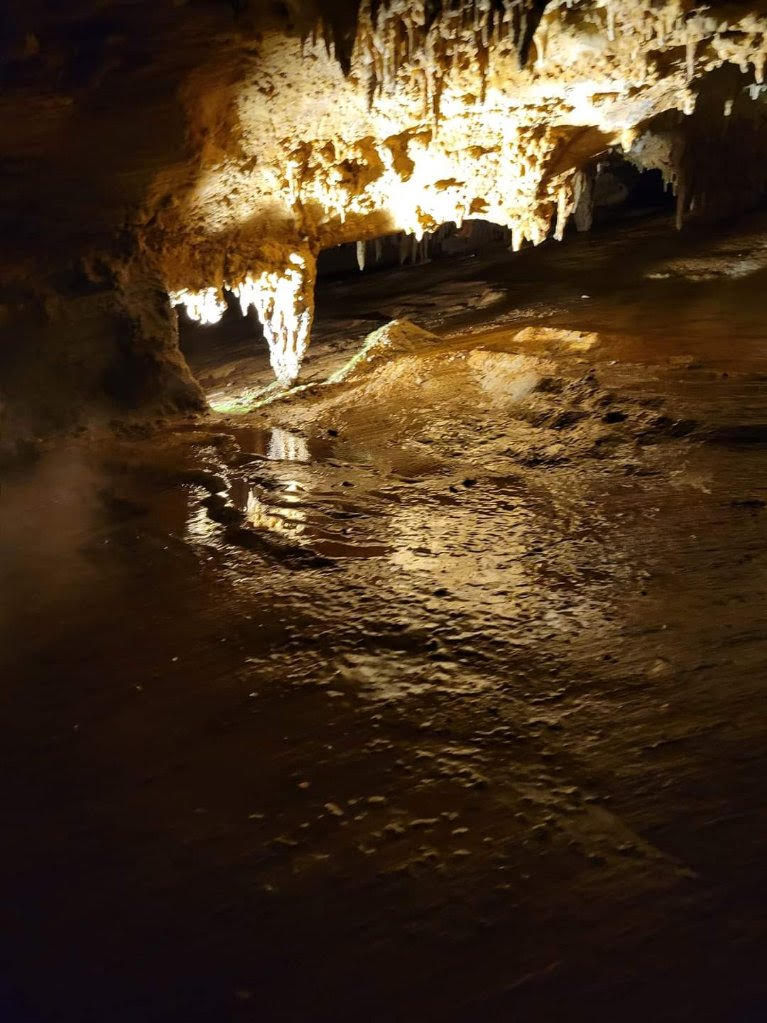
The majority of West Virginia's caves sit in the southeastern part of the state, particularly in Greenbrier and Pocahontas counties. This region is limestone-heavy, which is exactly what you need for cave formation. Water seeps through the rock, carving out passages and leaving behind the white calcite deposits that become stalactites, stalagmites, and those jaw-dropping formations you see on tours.
Here's what's nearby:
Lewisburg, a charming town with restaurants, shops, and a historic downtown that's perfect for pre- or post-cave exploration
Check out my blog on Lewisburg
The Greenbrier Resort, if you want to add some luxury to your caving weekend
Check out my blog on the Greenbrier
New River Gorge National Park, which is about an hour away depending on which cave you're visiting.
Check out my blog on the New River Gorge area places to stay
Seneca Rocks and Spruce Knob, both iconic outdoor destinations on the East Coast
You're not just visiting caves in the middle of nowhere. You're in one of the most beautiful, adventure-packed regions of Appalachia. Plan a weekend, not just a day trip.
And if you're coming from out of state, the nearest airports are in Charleston, WV or Roanoke, VA. From there, it's about a 90-minute to two-hour drive depending on which cavern you're headed to.
Is It Illegal to Go Caving on Private Property
Yes. Absolutely yes.
Unless you have explicit permission from the cave owner, entering a cave on private property is trespassing. It doesn't matter if the entrance is open or if you've heard other people go there. State law is clear, and property owners have every right to press charges.
Here's why this matters more than you think:
Responsible cavers follow a code. They don't damage formations. They don't leave trash. They don't disturb the unique animals that live in these ecosystems (like bats, which are already under serious threat from white-nose syndrome). When people sneak onto private land and trash a cave, it makes landowners less likely to allow access to anyone, including organized groups and researchers.
If you want to explore a cave that isn't commercially operated, reach out to the West Virginia Cave Conservancy or the National Speleological Society. Both organizations work with landowners to preserve access and protect these fragile environments. Some landowners do grant permission for a legitimate purpose, especially if you're part of an experienced group.
But showing up unannounced with a flashlight and a GoPro? That's not adventure. That's how people get hurt, caves get damaged, and access gets lost for everyone.
This one's a stunner, and it's one of the most accessible caves in the state.
Lost World Caverns sits just outside Lewisburg and offers both a self-guided tour and a wild cave tour, depending on how deep you want to go (literally). The self-guided option is a half-mile loop that takes you past some of the most dramatic formations in West Virginia, including the War Club, a 30-ton compound stalactite that hangs from the ceiling like something out of a fantasy novel.
What makes it special:
You move at your own pace. No rushing. No waiting for a group. Just you and the formations.
The cavern is a registered National Natural Landmark, which means it's geologically significant enough to be protected and studied.
The wild cave tour is a completely different experience. You're crawling through passages, squeezing through tight spots, and getting a closer look at areas most visitors never see. It's hands-on, muddy, and one of the best experiences you can have underground.
The temperature stays around 52 degrees year-round, so bring a light jacket even in summer. And if you've got kids, they'll love the gem mining activity at the gift shop (it's cheesy, sure, but it's also a great addition to the day).
Pro tip: Go early in the day if you're doing the self-guided tour. It gets crowded on weekends, and the magic of standing alone in a cavern is worth the alarm clock.

Organ Cave -Currently closed
Organ Cave is one of the longest caves in the United States, and it's packed with history.
During the American Civil War, Confederate soldiers mined saltpeter here to make gunpowder. You can still see the remnants of their operation inside, along with signatures carved into the rock by soldiers who were stationed there. It's not just a geological wonder. It's a time capsule.
This was the first cave I ever visited, and it truly sparked my interest in caving and geology. My passion for this cave even led me to take a Cave Ecology class in college. Currently, it is temporarily closed and has been for some time. Hopefully, it will reopen to the public soon.
The tour itself is guided and takes about 90 minutes. You'll walk through chambers with massive stalactites, hear stories about Thomas Jefferson's surveyors (who explored the cave in the late 1700s), and stand in rooms so large they could fit a house. The formations here are different from other caves in the region. The flowstone is particularly impressive, and the organ-pipe-like columns give the cave its name.
What to know before you go:
Wear good shoes. The floors are uneven, and there are plenty of stairs and inclines.
The cave is located in Greenbrier County, so you're in prime position to hit other nearby caves if you're doing a multi-stop trip.
Tours are seasonal, so check ahead before you drive out. Winter hours are limited.
This is the cave you visit if you love history as much as geology. It's not just pretty. It's meaningful.
Seneca Caverns is wild in a different way.
This is the cave for people who want to go down. Way down. The tour descends 165 feet below the surface, making it one of the deepest caverns open to the public on the East Coast. You're not walking on flat ground here. You're taking stairs, navigating tight passages, and moving through rooms that feel like you're inside the earth's architecture.
What sets it apart:
The formations here are older and more intricate than what you'll find in some of the more commercial operations. You'll see rimstone pools (terraced formations filled with crystal-clear water), stalactites that look like they're dripping in slow motion, and chambers that open up just when you think the passage is closing in.
The guides are fantastic. They know the science, the history, and the local folklore, and they're genuinely excited to share it. You're not getting a scripted tour. You're getting someone who loves this cave and wants you to love it too.
A few things to keep in mind:
This tour involves a lot of stairs. If mobility is an issue, this might not be the best fit.
It's cool inside, even in summer, so layer up.
The cave is located near Riverton, which puts you close to Seneca Rocks and other outdoor destinations if you're planning a bigger trip.
Seneca Caverns isn't the easiest cave to tour, but it's one of the most rewarding.

Smoke Hole Caverns sits in the shadow of Smoke Hole Canyon, one of the most beautiful (and remote) areas in West Virginia.
This cave is smaller than some of the others on this list, but what it lacks in size, it makes up for in character. The formations are tight, delicate, and incredibly well-preserved. You'll see coral-like stalactites, ribbon formations, and one of the most famous features in the cave: the Bridal Veil, a thin, translucent curtain of flowstone that looks like frozen lace.
The tour is guided and lasts about an hour. It's not strenuous, which makes it a good option if you're traveling with younger kids or older family members. But don't let the easy walk fool you. The formations here are world-class, and the guides do an excellent job of explaining how they formed and why this particular cave has such unique geology.
Why it's worth the drive:
The surrounding area is gorgeous. Smoke Hole Canyon is a destination in itself, with hiking, fishing, and some of the most dramatic views in the state.
The cave stays at a constant 56 degrees, so it's a great escape from summer heat.
It's less crowded than some of the bigger commercial caves, which means you get a more intimate experience.
If you want a quieter, less touristy cave visit, Smoke Hole Caverns delivers.
This one's for serious cavers.
Culverson Creek Cave is a wild cave, which means there's no lighting, no walkways, and no gift shop. You're entering on a backcountry cave tour with a guide who knows the passages, the hazards, and the ecosystem you're moving through. It's muddy. It's challenging. And it's absolutely incredible.
What you'll experience:
You'll crawl through narrow passages, wade through underground streams, and squeeze through openings that feel impossibly tight until you're on the other side. You'll see formations that have never been touched by commercial development, and you'll move through rooms that feel like they belong to the earth alone. The Wild Cat entrance can be used and if featured in the link above.
This is not a casual outing. You need to be in decent physical shape, and you need to be okay with getting dirty (really dirty). But if you want to experience caving the way serious spelunkers do, this is your chance.
Before you book:
You'll need a guide. Don't attempt this alone.
Wear clothes you don't care about. They will get ruined.
Bring gloves, a helmet, and a headlamp. Most tour operators provide these, but double-check.
Understand that this is a dangerous sport if you're not properly prepared. Respect the environment, follow your guide, and don't take unnecessary risks.
This is caving in its rawest, most authentic form. It's not for everyone, but if it's for you, it'll be one of the best experiences of your life.
Other notable Caves in West Virginia
Most of these caves are owned by families or by the WVCC, preventing you from just entering in these caves. You will need to make contact with someone, and it will take more investigation than this blog provides for you to actually be able to visit the inside of these caves.
The Saltpeter Cave
The Saltpeter Cave is another treasure in the Greenbrier Valley. Actually, located near Greenville in Monroe County. It is the southernmost West Virginia cave on my list. This cave was vital during the early American frontier, supplying key minerals for gunpowder production. Today, it's a destination for spelunkers and history enthusiasts. Its twisting passages and distinctive formations make it an intriguing site to explore. This is a natural national landmark and a preserve site for Indiana and Long Eared Bats.
Rapps Cave
Rapps Cave is a lesser known but equally engaging cave. It provides a more rugged and adventurous experience. There are ancient petroglyphs from the native Americans on the walls of this cave, and they have been preserved very well. The cave's narrow passages and tight squeezes are ideal for thrill-seekers. Despite its challenges, the breathtaking formations and underground streams make the effort worthwhile.
Friars Hole Cave System
The Friars Hole Cave System ranks among the longest cave systems in the United States. With over 44 miles of mapped passages, it offers endless exploration opportunities. But there is a problem, the entrance is unstable and nobody is allowed to explore it. The area around the cave is monitored too because of the instability. The cave's extensive network of tunnels and chambers houses a variety of unique formations and underground streams. It's a haven for seasoned cavers seeking a challenge. Click the link above to learn more.
The Sinks of Gandy
The Sinks of Gandy is a distinctive cave offering a different caving experience. Located near Spruce Knob, this cave is renowned for its spacious, open passages and underground streams. The cave's entrance is a sinkhole, adding an adventurous element to the exploration. It's an excellent spot for both beginners and seasoned cavers.
The Bone Cave
The Bone Cave is an intriguing cave with a rich history. It was once used as a burial site by Native Americans, containing various artifacts and remains. The cave's expansive chambers and intricate formations make it a captivating place to explore. It's a must-visit for those interested in the history and natural beauty of West Virginia.

What to Bring on Any West Virginia Cave Tour
No matter which cave you visit, a few essentials will make your trip better.
Good shoes. Not sandals. Not flip-flops. Closed-toe shoes with grip. Cave floors are slippery, uneven, and sometimes wet. Hiking boots or sturdy sneakers are your best bet.
A light jacket. Even in July, caves stay cool. Most hover between 50 and 56 degrees year-round. You'll be comfortable in long sleeves and pants.
Water. Tours can last anywhere from 45 minutes to several hours. Stay hydrated, especially if you're doing a more strenuous wild cave tour.
A sense of wonder. These formations took millions of years to create. The ecosystems inside are fragile. The history is real. Treat the experience with the respect it deserves, and it'll stick with you long after you leave.
West Virginia's caves aren't just tourist attractions. They're geological masterpieces, historical landmarks, and ecosystems that deserve protection. Whether you're walking a self-guided loop or crawling through a backcountry passage, you're stepping into something ancient and irreplaceable. And that's what makes them so worth visiting.
This blog contains affiliate links. If you click on them and make a purchase, I might receive a commission at no extra cost to you.


I perceive the consistent use of neutral terminology throughout the text. Analytical framing is constant. The website offers additional contextual resources relevant to the subject. Engagement models are contextualized via interactive digital platforms.